
As part of the South West Shakespeare festival, Lightbear Lane is delighted to welcome Shakespeare scholar Prof Pascale Aebischer for a lecture to explore how live performances of Shakespeare’s plays find their way onto our screens.
Shakespeare’s plays were written for live performance in a very specific theatrical culture, for particular actors to perform on the stages of early modern London, to an audience that understood and expected conventions such as direct address, non-naturalistic staging, blackface performance and boys playing women’s parts. Those conventions shaped how audiences understood, for example, the final scene of Othello, where Richard Burbage in blackface make-up smothered a teenage boy in whiteface make-up before launching into a soliloquy. Since then, not only have theatrical conventions changed quite fundamentally, but so has the manner in which we consume live Shakespeare. The advent of digital theatre broadcasting technologies, with multi-camera set-ups, has brought ‘live’ Shakespeare to our screens, whether in a local arts cinema or our homes.
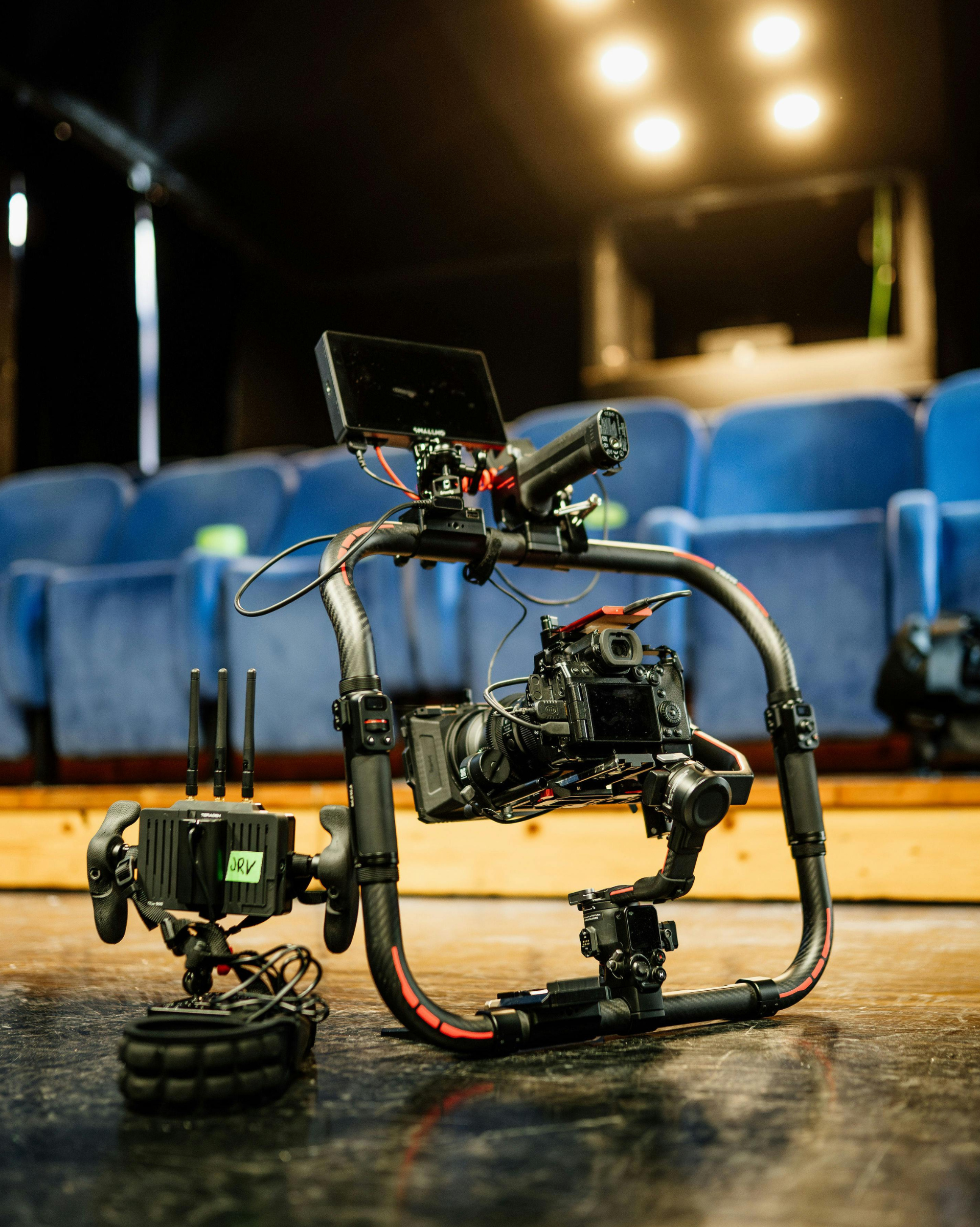
This lecture will take you on a journey through the backstage and offscreen decision-making processes that re-shape theatrical productions of Shakespeare’s plays for present-day screen audiences. It will pay particular attention to examples where broadcast technologies, which aim very hard to remain ‘invisible’ to screen audiences in order to produce a sense of theatrical immersion, affect how viewers decode gender, race, and power relations. Drawing on examples from Shakespeare broadcasts, it will show how conventions of direct address, speed of editing, camera shots with zoom lenses, casting and lighting for skin tones affect what we see, whom we see, and how we interpret what we see when we watch ‘live’ Shakespeare in the cinema.
Doors at 1:30pm to grab a drink at the bar and enjoy our “Impressions of Venice” exhibition inspired by our The Merchant of Venice performance on 24th April.
Pascale Aebischer is Professor of Shakespeare and Early Modern Performance Studies at the University of Exeter. She has a long-standing interest in the relationship between early modern performance conventions and their translation into present-day media, whether those are modern stages with their full technological apparatus, or cinematic and digital performances. Her books include Shakespeare’s Violated Bodies: Stage and Screen Performance (Cambridge, 2004), Screening Early Modern Drama: Beyond Shakespeare (Cambridge, 2013), Shakespeare, Spectatorship and the Technologies of Performance (Cambridge, 2020) and Viral Shakespeare: Performance in the Time of Pandemic (Cambridge, 2021). During and after the pandemic, she worked on projects concerned with the resilience of the theatre industry in the UK and the G7 nations. She is now returning to working on Shakespeare with an edition of Titus Andronicus.

Directions
St Nicholas Priory is on Mint Lane with walking access from Fore Street or Bartholomew Street West.
The nearest car park is Mary Arches Street, which is a five-minute walk. Exeter Central railway station is a ten-minute walk. The bus station is a 15-minute walk with many buses stopping on the High Street which is ten minutes away.
Access
Unfortunately, due to the nature of this historic building, there is no wheelchair access for our upstairs rooms.
Facilities
Our outdoor toilet block can be made available on request.
If you have any questions or concerns about your visit please email admin@nicholaspriory.com